Corporate Trust Centre
Transparency, security, evidence control and clear public-to-private boundaries.
Trust on this site is not a branding accessory. It is expressed through disclosure discipline, controlled claims, versionable evidence and a narrow reserved-area boundary.
Operational trust framework
The purpose of this page is to explain how the public site, the reserved portal boundary and the delivery model are kept coherent. That coherence matters because regulatory trust erodes quickly when public wording outruns actual governance.
Boundary discipline
The public site, digital pages, network model and reserved portal are separated so operators and clients do not inherit unnecessary internal taxonomy or unsupported commercial signals.
Evidence-led delivery
Cross-border matters are framed through decision records, documentary evidence and escalation logic rather than informal judgement trails.
Controlled partner use
Local operating support is described only where required and activated through a readiness and lead-ownership model, not through blanket global claims.
Privacy and consent
Cookie categories remain blocked by default outside essentials, and legal disclosures are maintained from approved company data rather than ad hoc page edits.

Trust should look structured before the reader reaches the legal detail.
Institutional imagery is used here to reinforce boundary discipline, seriousness of tone and the expectation that public claims remain narrower than internal process reality.

Evidence quality is a visible part of the public perimeter.
Document retention, evidence packs and authority-facing reasoning need a documentary setting that feels deliberate rather than improvised. That is why the archive-led image now sits in a supporting role, not as the dominant hero.
How trust is implemented
Trust on a cross-border corporate site is not created by security language alone. It depends on whether the public surface respects the same principles that should govern the actual work: role clarity, controlled disclosure, reliable legal identity, explicit contact channels, consent discipline, and boundaries between public explanation and reserved operational tooling.
For that reason, CSA Nexus keeps the corporate site, the international collaboration model, the digital surface and the reserved access boundary separated. Each surface has a different role and a different claim set. Advisory is sold where advisory exists. Partner-enabled growth is described as a framework in development, not as an already deployed global machine. Digital capability is framed through governed infrastructure and maturity, not through vague automation promises.

Public wording and operating reality should say the same thing.
Contact routes stay narrow, cookies stay blocked until consent, and the login shell remains intentionally minimal so the reserved area does not leak internal structure into the public perimeter.
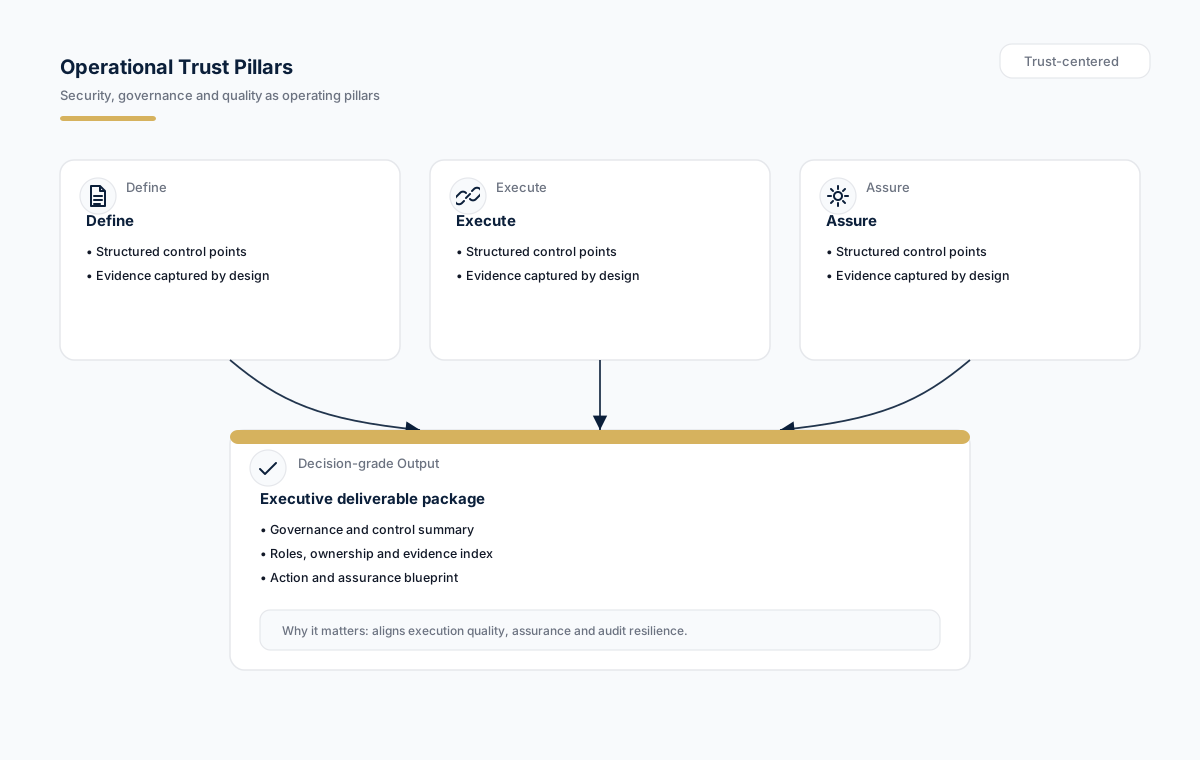
Trust is expressed through operational controls, not branding claims.
The public site should show disclosure discipline, surface separation, evidence awareness and controlled partner use as concrete controls.
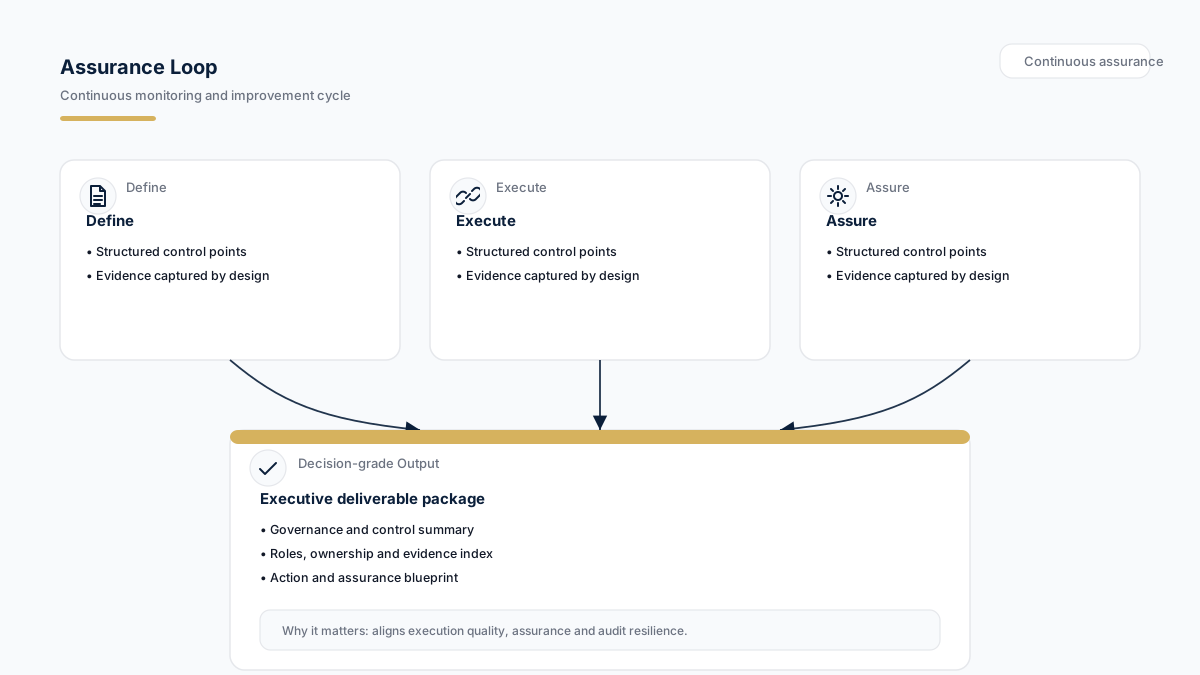
Public wording, reserved access and delivery posture should reinforce each other.
The strongest trust signal is a coherent loop between what the site says, what the login boundary does and how mandates are actually led.
Why this matters commercially as well as legally
In regulated cross-border work, weak trust signals cost time and money long before they become legal problems. If clients cannot tell who leads the mandate, what is advisory, what is operating support, which partner is acting in what role and how evidence is supposed to be retained, the delivery model becomes harder to buy and harder to rely on.
Trust therefore supports commercial clarity. It helps clients understand how a scoped mandate is handled, where personal data and contact flows sit, how authority-facing reasoning is preserved and why the partnership model is described carefully rather than theatrically.
Trust signals this site is designed to preserve
- clear distinction between CSA Nexus and CIESSE roles
- defined boundary between public site, research surface and reserved area
- controlled statements around UK-EU capability and partner use
- evidence-minded posture across customs, controls and audit-sensitive work
- publicly readable mandate forms so buyers can understand diagnostic, project, retained and integrated scopes before opening a private discussion
| Surface | What belongs there | What does not belong there |
|---|---|---|
| Main corporate site | Advisory scope, positioning, thought leadership, service architecture and trust disclosures. | Reserved workflows, operator-facing controls and over-specific internal process detail. |
| Connected surfaces | Partnership logic, digital capability and other contextual surfaces with their own claim set. | A blurred sitemap that collapses every scope into one undifferentiated navigation layer. |
| Reserved portal boundary | Authentication, support routing, trust information and controlled access. | Public marketing claims, broad site navigation or unnecessary exposure of internal application structure. |
| Mandate scoping and partner logic | Readable commercial forms, role clarity, evidence expectations and an honest distinction between CSA-led, CIESSE-led and integrated work. | Vague references to “support” or “partnership” that leave buyers unsure who leads, who executes and how the case will be governed. |