Operating Discipline
How We Work
A senior-led model built for cross-border complexity, practical implementation, commercial clarity and disciplined growth.
Direct senior involvement, from scoping to delivery
CSA Nexus is designed around direct senior engagement. Clients do not buy into a leverage-heavy delivery chain where relationship ownership, technical judgement and delivery are distributed across too many layers.
Mandates are instead structured around clear accountability, explicit decision ownership and practical implementation logic. That is particularly important where customs, export controls, sanctions, origin, valuation and indirect-tax issues overlap with operational realities.
Senior judgement stays close to scoping, escalation and delivery.
That proximity is what keeps the model lean, credible and implementable when customs, controls and finance-adjacent issues overlap.
How the service model reads in practice
The page should make it easy for a buyer to understand how mandate type, seniority model, delivery intensity and economic value fit together.
Why this matters
If the service model is not explicit, buyers cannot tell whether they need a short diagnostic, a project, ongoing judgement or a more structured enablement layer.
| Form of engagement | Where seniority sits | Typical client benefit | Typical commercial form |
|---|---|---|---|
| Diagnostic / entry work | Senior judgement sits at scoping and root-cause framing. | Faster clarity on what is actually broken, what can wait and which workstream should not be launched prematurely. | Usually a bounded fixed-fee review with clear outputs and a cleaner recommendation on next steps. |
| Advisory project | Senior judgement remains close to design choices, evidence decisions and escalation points. | More durable remediation, stronger internal alignment and less expensive rework on the same issue later. | Usually project-based or phased, especially where the mandate has separate evidence, design and implementation layers. |
| Retained / fractional support | Seniority stays accessible over time rather than only at kickoff. | Continuity of judgement without immediately building a heavy internal headcount layer. | Usually recurring support or fractional coverage, sometimes combined with narrower technical projects. |
| Enablement / digital support | Senior judgement shapes the model and the control logic that the client will keep using. | Lower dependence on improvised decision-making, cleaner documentation and better repeatability under corridor pressure. | Often a hybrid of project and support economics, and in selected cases may include value-sensitive elements where the benefit can be observed clearly. |
Representative operating evidence
The original slides mixed leadership claims, operational charts and KPI views. Here that material is turned into cleaner public-facing evidence panels that support the service model without leaking identifying detail.
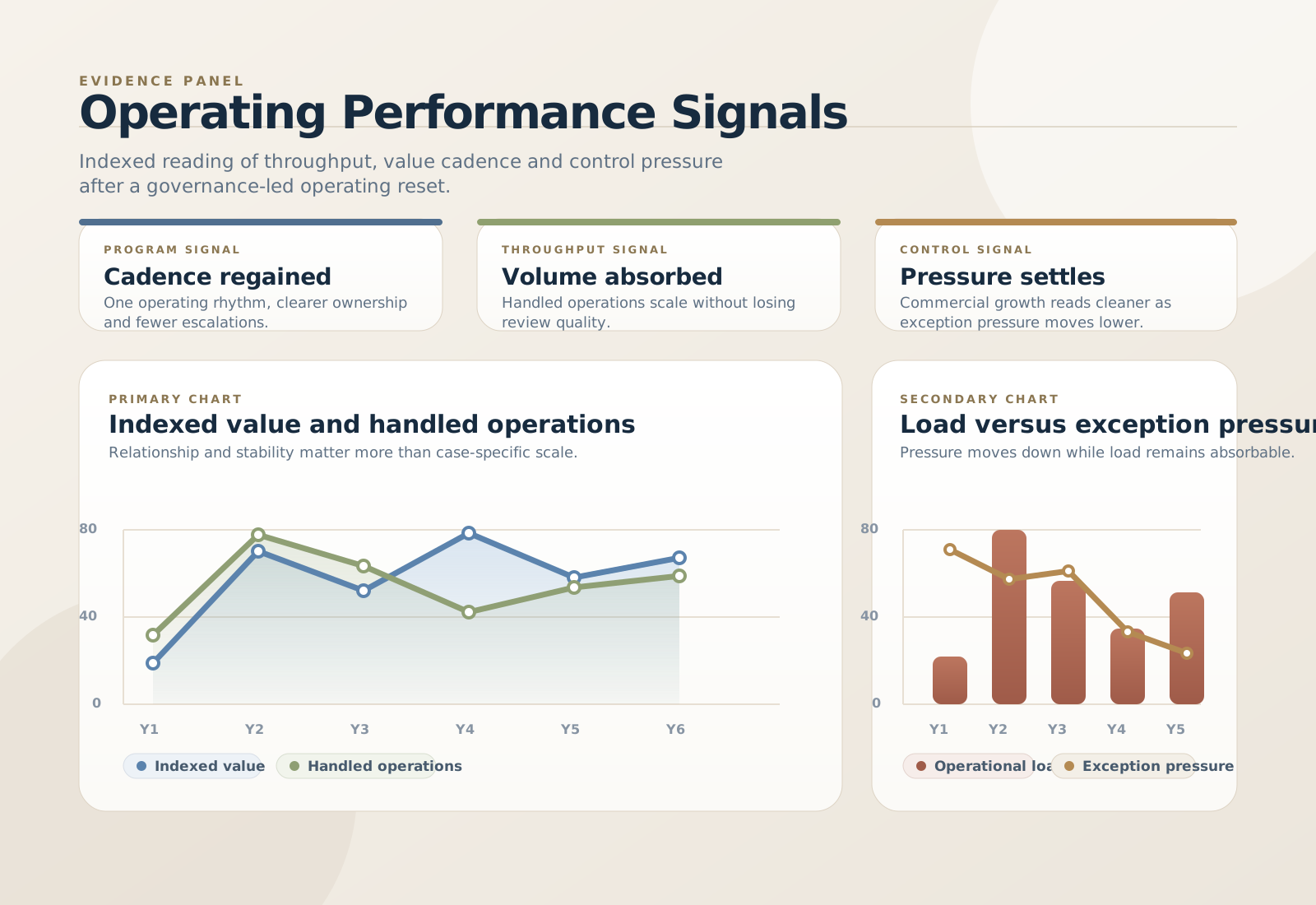
Why this panel is here
It supports the senior-led delivery claim with a more credible reading: operating reset, governance cadence and repeatable reporting rather than a vague leadership statement.
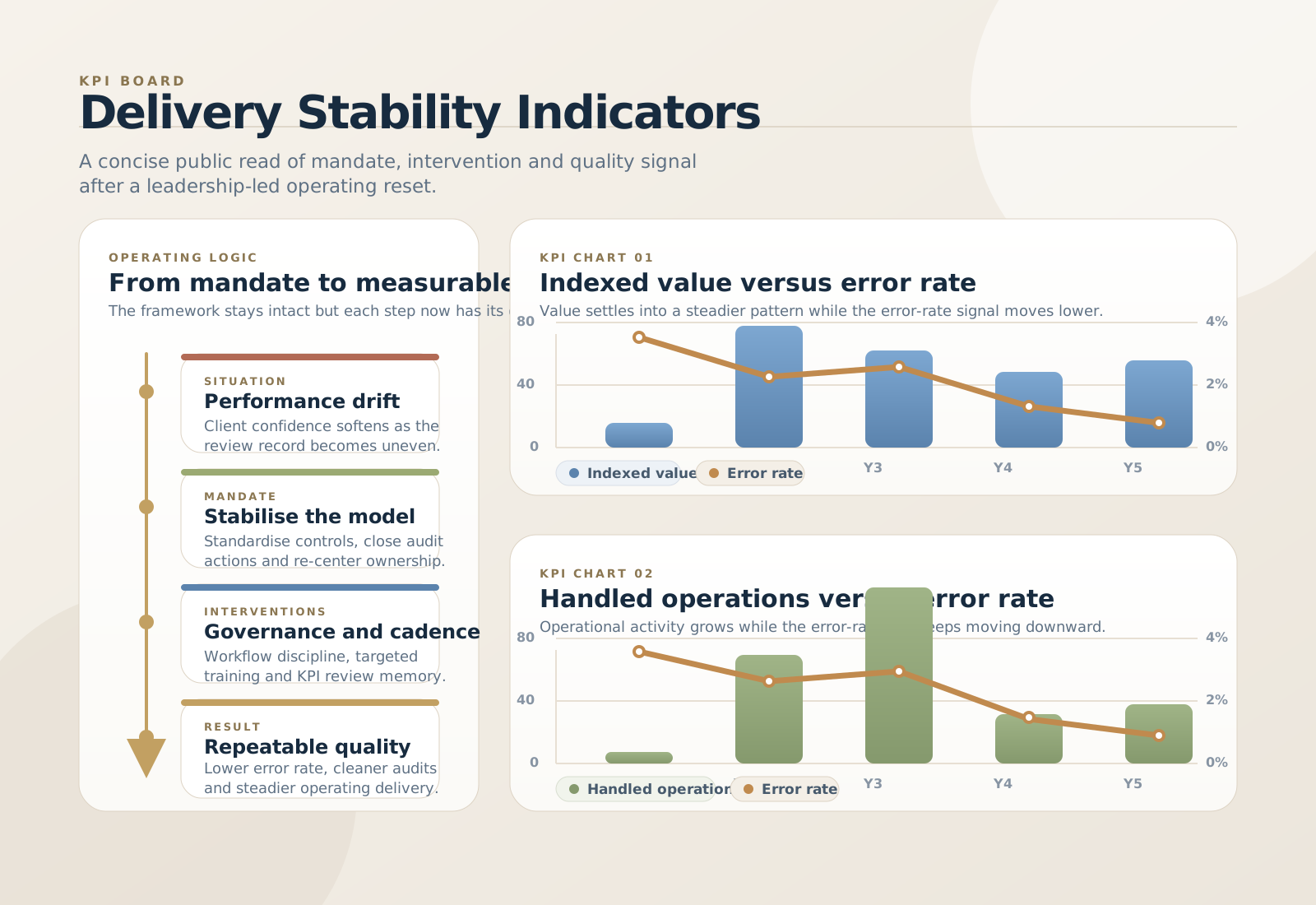
What the KPI view adds
The framework makes the delivery model easier to read in public: issue, mandate, intervention and measurable operating effect, without turning the page into a client memo.
Built on a real UK-EU operating axis
The model is grounded in real UK-EU work, with strong advisory emphasis on the UK-EU corridor, a credible EU and Italy-side operating footing where needed, and specialist US export-control awareness where a case inherits extraterritorial exposure. This is a practical axis, not a marketing abstraction.
That axis also explains the CSA Nexus and CIESSE relationship more honestly. The firms share much of the same capability perimeter, but CIESSE adds the direct material execution of customs formalities and Italy/EU operating file control where the mandate needs it. CSA Nexus remains the advisory and governance lead surface.
What clients gain from this model
- Clearer ownership and faster escalation paths
- More direct access to judgement and less delivery dilution
- Solutions designed for implementation, not only for presentation
- A structure that stays lean while dealing with high technical complexity
- Selective use of specialists only where the matter really needs them
Four practical forms of engagement
The working model is intentionally public-facing because clients need to understand how the firm creates value before any detailed scope is opened.
1. Diagnostic
Used when the client needs a high-signal review of a corridor, control issue, customs file, valuation bridge, origin position or governance gap before deciding what the larger programme should be.
2. Project
Used for remediation, design and implementation workstreams with clear outcomes: stronger controls, clearer operating model, improved evidence chain or better cross-functional alignment.
3. Retained / Fractional
Used when the business needs continuity of judgement, escalation support and senior cross-border oversight without hiring a full internal headcount solution immediately.
4. Enablement
Used for targeted toolkits, decision templates, research packs and supervised enablement that make the client operating model more repeatable and less dependent on improvised judgement.
When specialist or country support is needed
Where a mandate requires additional local or specialist input, CSA Nexus may activate selected collaboration resources under a central coordination logic. The trigger is real client need, not the desire to display broad nominal coverage.
This preserves a single lead relationship, clearer economics and more disciplined client handling than a loose referral chain.
Designed to stay credible as it grows
International advisory models should scale through judgement, method and trusted collaboration, not through inflated structures or premature claims. The objective is to grow standing without sacrificing truthfulness.
That is why the site keeps advisory, international collaboration, digital and portal surfaces distinct while making their relationship explicit. It is also why the CIESSE relationship is described as a real partnership that strengthens EU delivery credibility without reducing either firm to a subordinate label.
How value is created for the client
The value of the model is not only technical correctness. It is the reduction of avoidable escalation, duplicated advisory spend, repeated broker queries, weak internal handoffs, costly rework and the hidden commercial drag created when customs, compliance, finance and operations are working from different assumptions.
The model is built to produce stronger decisions earlier, a cleaner evidence trail and more reliable coordination across internal and external stakeholders.
- Clearer mandate forms instead of vague advisory promises
- Seniority kept close to the real decision points
- Selective activation of additional operating support only where it adds value
- Better cost-benefit through reduced friction, weaker errors and improved repeatability
Ready to discuss a cross-border mandate with clear ownership?
Advisory mandates stay on the main site. Collaboration logic and operating support sit next to them as structured complements, not as substitutes for present capability.